Understanding the Hacking Information Icon: A Comprehensive Guide
Introduction to the Hacking Information Icon
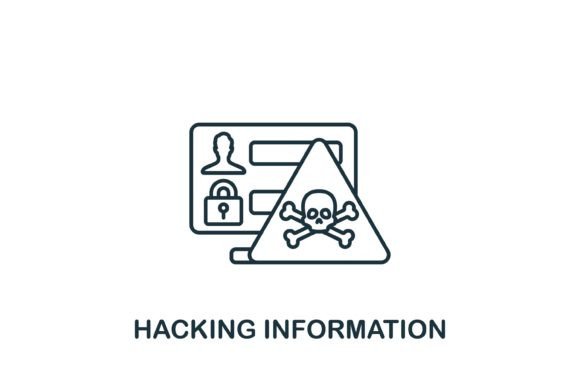
The Hacking Information Icon is a versatile and visually striking symbol that has become increasingly popular in various digital contexts. This icon, often used in web design, infographics, and templates, serves as a simple yet effective way to represent cybercrime, security, and data protection. Its clean lines and straightforward design make it an ideal choice for both professional and creative projects.
Characteristics of the Hacking Information Icon
The Hacking Information Icon is characterized by its simplicity and clarity. It typically features a shield or lock with a line or slash through it, symbolizing the breach or threat to security. This design is not only aesthetically pleasing but also universally recognizable, making it a powerful tool for conveying complex ideas at a glance.
- Simplicity: The icon uses minimal elements, making it easy to understand and remember.
- Versatility: Suitable for a wide range of applications, from educational materials to corporate reports.
- Customizability: Easy to edit and adapt to different styles and color schemes.
Advantages of Using the Hacking Information Icon
Incorporating the Hacking Information Icon into your projects offers several advantages:
- Enhanced Visual Communication: The icon quickly conveys the concept of cybersecurity, making it ideal for infographics and presentations.
- Professional Appeal: Its sleek design adds a professional touch to any document or website, enhancing credibility.
- User Engagement: The icon's clear and compelling design can help engage users and draw their attention to important security information.
Use Cases for the Hacking Information Icon
The Hacking Information Icon finds application in numerous scenarios:
- Educational Materials: Use it in textbooks, online courses, and training documents to illustrate cybersecurity concepts.
- Corporate Reports: Incorporate the icon in annual reports, policy documents, and security guidelines to highlight key points.
- Web Design: Add the icon to websites to indicate secure pages, login areas, and other security-related sections.
- Infographics: Utilize the icon in infographics to visually represent data breaches, security measures, and cyber threats.
Considerations When Using the Hacking Information Icon
While the Hacking Information Icon is a valuable asset, there are a few considerations to keep in mind:
- Contextual Relevance: Ensure the icon is used in a context where it makes sense and adds value. Misuse can lead to confusion.
- Consistency: Maintain consistency in the use of the icon across all materials to avoid visual clutter and maintain a cohesive look.
- Accessibility: Make sure the icon is accessible to all users, including those with visual impairments. Provide alternative text (alt text) for screen readers.
File Formats and Ease of Use
The Hacking Information Icon is available in multiple file formats, each offering unique benefits:
- EPS File: Ideal for vector graphics, allowing for scalability without loss of quality. Perfect for print and high-resolution displays.
- JPG File: Suitable for web use, providing a good balance between image quality and file size.
- AI File: Adobe Illustrator format, offering advanced editing capabilities and compatibility with other Adobe products.
- SVG File: Scalable Vector Graphics format, which is highly versatile and can be easily edited and integrated into web designs.
These file formats make the Hacking Information Icon easy to edit and use in various projects, ensuring that it can be adapted to meet specific needs and requirements.
Conclusion
The Hacking Information Icon is a powerful and versatile tool for representing cybersecurity and data protection. Its simplicity, versatility, and ease of use make it an excellent choice for a wide range of applications. By understanding its characteristics, advantages, and best practices, you can effectively incorporate this icon into your projects to enhance visual communication and engage your audience.